
FIELD GUIDE / 01
Where to look for signs
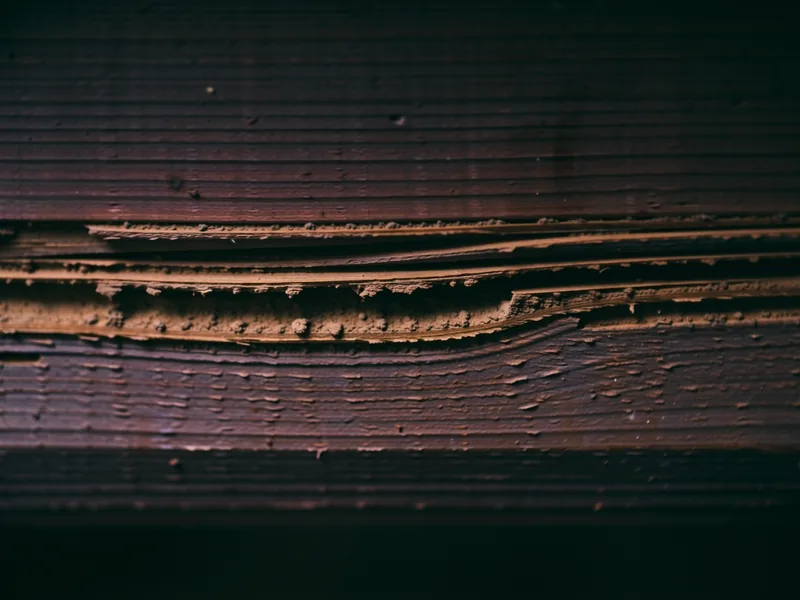
Look along accessible foundation edges, around utility penetrations and where exterior wood meets soil. Shelter tubes, damaged wood or discarded wings are reasons to request identification; a tube alone does not establish whether termites are active now.
Brady Heights and Maple Ridge contain historic properties with woodwork and trim. Check for wood-to-soil contact and moisture around your own foundation.
FIELD GUIDE / 02
How termites get in
OSU describes subterranean termites moving from soil to structural wood along mud tubes. In older houses the contact points are everywhere: sills at or near grade, piers in the crawl space, wood steps and porch framing touching soil. Settlement cracks in the clay connect soil to structure where nothing touches.
- Sills and piers Original timbers close to the soil; where a raised foundation has settled, the gap closes.
- Additions A second foundation line means a second set of contact points and joints.
- Stored wood Firewood, form boards and landscape timbers at the foundation are a bridge.
FIELD GUIDE / 03
What an inspection should cover
Make the perimeter, garage and any accessible crawl space available. Point out leaks, drainage problems, additions and previous treatment documents. Ask the inspector to distinguish live activity, older evidence and conditions that could allow access.
Request a diagram or written description of findings and inaccessible areas. A concealed area cannot be cleared by an inspection that did not reach it; ask what access or additional investigation would be needed.
Time the inspection before swarm season opens in March, or at the first swarm. A colony feeds year-round below the frost line, so a winter inspection finds the same routes with a clearer calendar. A house that has been treated before still needs inspection; previous treatment does not prevent new routes.
FIELD GUIDE / 04
How liquid and bait proposals differ
A liquid proposal should identify the areas to be treated, any drilling or trenching and how surfaces will be restored. A bait proposal should identify station placement, inspection intervals and the ongoing monitoring charge.
Both approaches depend on the building and the label for the product used. Ask how the provider will handle inaccessible sections and what evidence or monitoring will guide follow-up. Treatment does not replace repair of moisture problems or damaged wood.
FIELD GUIDE / 05
What to compare before signing
Obtain itemized proposals for the same structure and coverage period. Compare initial treatment, monitoring, renewal charges and the response to new activity. Ask whether the warranty provides retreatment only or also covers repairs, and read its limits and exclusions.
Keep inspection and treatment records for future owners and ask whether coverage transfers. Correct leaks and drainage problems and remove wood-to-soil contact where practical; consult a professional before changing structural components.