Find activity and access
A provider can inspect likely travel routes, food sources and exterior openings and identify the animal involved.
 Tulsa Pest Guide Request a quote →
Tulsa pest guide Exclusion
Mice and rats commute along the same routes every night: the worn run along the baseboard, the gnawed gap at the foundation vent, the opening at the roofline. Trapping without exclusion removes the current population and leaves the door open for the next one. The part that lasts is the one that seals the building.
Request a quote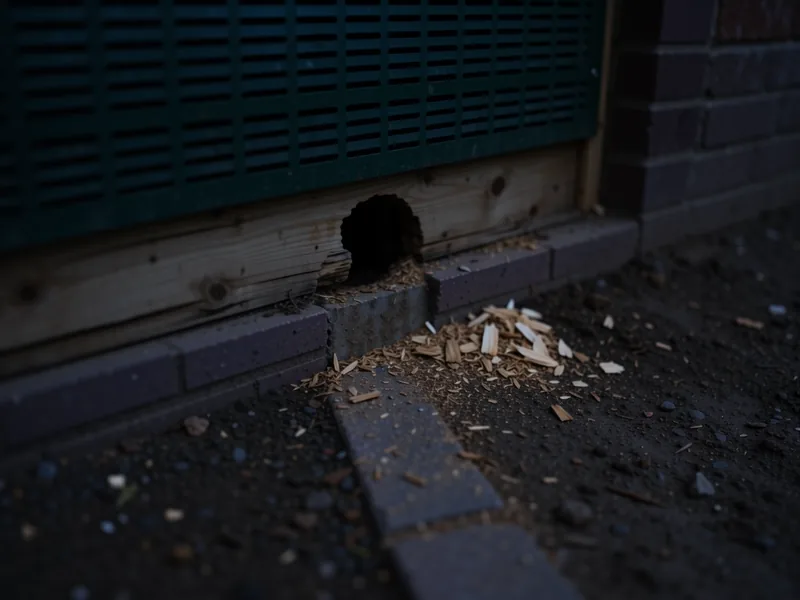 Exclusion / FIELD GUIDE
YOUR FIELD GUIDE
Start with
the signs.
Look closely, note where you find activity, and bring those details to an inspection.
Jump to the service plan ↓01 / Start here
Note where and when you find signs around the property.
02 / Between visits
Small changes can make an inspection more useful and address conditions that may support pests.
Store food and pet food in closed containers; clean spills and keep waste bins tightly covered.
Inspect door sweeps and accessible gaps, and ask which openings need durable repairs.
Never sweep or vacuum dry droppings. Avoid disturbing extensive contamination and ask about professional cleanup.
03 / The inspection & plan
Ask the provider to explain what they found before agreeing to work.
A provider can inspect likely travel routes, food sources and exterior openings and identify the animal involved.
Ask how trapping will be handled and which openings will be repaired, including materials and timing.
Discuss follow-up checks, cleanup and what happens if activity continues after repairs.
Field guide / 01
Droppings, gnawing, damaged food packaging and noises above a ceiling can indicate activity, but a sound alone does not identify the animal. In tree-lined neighborhoods an autumn attic noise can be squirrels — OSU documents gray and fox squirrels denning in cavities as small as two inches across — and the turning nut crop of pecans, acorns and hickory nuts, which ripens on a five-to-seven-year boom-and-bust cycle, pushes both squirrels and rodents toward the roofline and foundation. Record where and when signs appear. A provider can check routes along walls, behind appliances, in storage and around plumbing, then inspect the exterior for openings and food sources.
A small gap at a garage door, utility line, vent or roof junction can be more useful to investigate than a single sighting in the middle of a room. In Tulsa’s Brookside dining and shopping area, a business with food waste can check bin lids and spills; restaurants in a neighborhood do not by themselves establish exposed waste or rats at any particular property.
Field guide / 02
Traps can remove animals already inside and allow the provider to check activity. Bait stations may be proposed for monitoring or control, often outside; ask where they will be placed, how they are secured and who services them. Indoor bait can leave an animal in an inaccessible space, so ask about that possibility and the alternatives before accepting a plan.
Exclusion addresses entry points. Depending on the opening, a provider may propose metal mesh, vent screening, door sweeps or other durable repairs. Ask which gaps will be sealed and how the timing relates to trapping. Do not block required ventilation or drainage openings indiscriminately; the repair should suit the building and avoid trapping animals in inaccessible spaces.
Field guide / 03
Do not sweep or vacuum dry droppings. For a small area, follow current public-health cleaning guidance, use gloves and disinfectant, and allow the disinfectant to work before wiping. Extensive contamination, nesting material or damaged insulation may call for professional assessment and protective equipment. Ask whether cleanup is included rather than assuming it is part of trapping.
Before the visit, secure food and make the affected cabinets or access areas available without disturbing droppings. Tell the provider about children, pets and inaccessible voids. After repairs, request a list or photographs of openings addressed, dates for trap checks and a point of contact for fresh signs. Continued activity can indicate that a route or food source was missed.
Field guide / 04
A simple trapping visit and a building-wide exclusion project are not the same service. Number and height of openings, roof or crawlspace access, extent of activity and the number of return visits can change the work. Insulation replacement, electrical repairs and contamination cleanup may be separately quoted.
Ask for inspection, trapping, repairs and monitoring as separate line items. Confirm whether the warranty applies to repaired openings, continued rodent activity, or both, and what could void it. A lower initial price can leave substantial repair or follow-up work outside the contract, so compare the complete scope and not only the first visit.
Field guide / 05
Walk the proposed repair list with the provider. Door sweeps, vent screening and utility penetrations serve different purposes, and a durable repair needs to fit each opening without obstructing necessary building functions. Ask whether inaccessible roof or crawlspace areas were inspected and whether additional work may be needed once access is available.
For a business or shared building, establish who will keep food and waste secured and who can authorize repairs. After each trap check, request a brief record of findings and any new routes found. If sounds continue, the provider may need to reassess identification as well as look for openings that were missed.
04 / Before you decide
Removing animals without addressing entry points may leave the building open to another visit. Ask for a written list of repairs.
Do not sweep or vacuum them dry. Use appropriate disinfectant and gloves for small areas; seek professional advice for extensive contamination.
Ask for the openings covered, repair materials, trapping and follow-up visits, and any warranty on the repairs.
Because the route stays open. Mice run the same paths nightly, and a trapping-only visit removes the population that was there while leaving every entry gap in place. The part that ends the cycle is sealing the openings — vents, penetrations, the roofline gap.
Usually mice or rats commuting along a worn run path; in tree-lined neighborhoods it can be squirrels, which OSU documents denning in cavities as small as two inches across. An inspection reads the evidence — droppings, gnaw marks, run paths — and identifies which one it is, because the fix differs.
Common targets
Signs worth not waiting on
Job notes
What moves the price
For an accurate number, get quotes for the same scope: same openings, same trapping period, same cleanup.
Related